
 Mar 31, 2026
 Vinyl vs. Hardwood: Which Flooring Suits Your Lifestyle?
-
 By Admin
Choosing between hardwood floors and vinyl floors is determined by your needs and lifestyle. Viny...
Read More

Call Our Experts: 504-470-0455

Sealing a home from the outside is one of the most effective ways to stop drafts, as it blocks cold air before it enters the wall cavity. Key exterior areas to seal include window frames, door perimeters, electrical penetrations, and gaps in siding.
Knowing how to seal drafty rooms from the outside starts with understanding your home’s building envelope, and the gaps in it that quietly drain your energy budget all year.
According to ENERGY STAR, air leakage accounts for 25 to 40 percent of the energy used for heating and cooling in a typical residence. For New Orleans homeowners dealing with older wood-frame construction, humid storm seasons, and wide temperature swings, those numbers can climb even higher.
Big Easy Renovations is a New Orleans-based renovation contractor serving homeowners across Orleans, Jefferson, and St. Tammany parishes with exterior and interior renovation services. If cold air is working its way through your walls, contact us today for a free estimate and let’s find out exactly where it is coming from.
 Drafty rooms are caused by air leaks in the building envelope, not windows alone. Gaps around plumbing penetrations, deteriorating siding panels, and unsealed door frames are frequent entry points for outside air. The stack effect drives the process continuously: warm air escapes through upper openings while cold air is pulled in through foundation gaps and rim joists below.
Sealing from the outside addresses infiltration at its source before air ever reaches your interior walls. That approach is faster, more durable, and more cost-effective than chasing leaks room by room from the inside. The U.S. EPA estimates homeowners can save an average of 15 percent on heating and cooling costs by air sealing their homes and adding insulation in attics, floors over crawl spaces, and basements.
Exterior air leaks rarely come from just one place. In most homes, especially older ones in the New Orleans area, the leaks are spread across several points in the building envelope, each contributing to the drafts and energy loss you feel inside.
Door frames are a particularly overlooked air leak source. A gap as small as 1/8 inch around a door’s perimeter can let in as much outside air as a small window left halfway open, according to This Old House. Multiply that across several exterior doors and the energy loss becomes significant in a hurry. Window frames develop the same problem as caulk ages, cracks, and pulls away from the trim.
Cracked, warped, or loose siding creates direct channels for air to travel behind your walls. Because siding covers large surface areas, even minor damage spread across multiple spots adds up to a wide-open gap in your home’s exterior shell. In New Orleans, repeated exposure to heat, humidity, and storm-driven wind accelerates this deterioration faster than in drier climates.
Every location where a pipe, cable, or duct exits the home is a potential air leak. Without proper sealing, these openings allow a steady exchange of conditioned and outdoor air through the wall assembly. They are often left partially unsealed during original construction and are among the first spots to check when exterior air sealing fails to resolve persistent drafts.
The rim joist sits on top of your foundation wall and closes off the floor system. It is one of the thinnest points in a home’s exterior and among the most commonly overlooked. Cold air entering the rim joist travels up through floor and wall cavities, producing drafts that seem to come from everywhere and nowhere at the same time.
The right method depends on the type of gap and where it sits in the door or window assembly. Each component, the frame, the threshold, the weatherstripping, and the sash, requires a different product and approach to create a complete exterior seal.
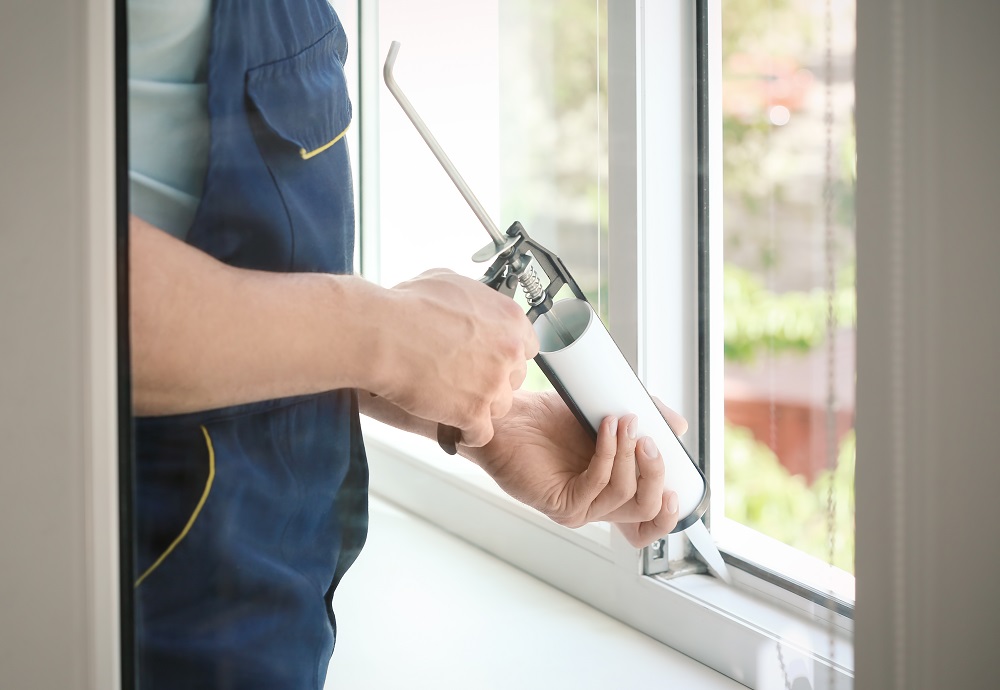
 Remove cracked or peeling caulk before applying a fresh bead. Silicone is the recommended product for exterior air sealing because it resists moisture, stays flexible through temperature swings, and does not shrink the way latex caulk does. Work all the way around the frame, including the top sill, which homeowners often skip. For gaps wider than 1/4 inch, low-expansion spray foam fills the opening first, with caulk applied on top as the weather-tight finish layer.
Check the sweep at the base of each exterior door. If daylight is visible under a closed door, the sweep needs replacing. A properly fitted door sweep creates a contact seal against the threshold and eliminates one of the most common exterior air leak points in any home. Thresholds with pliable gaskets add an extra layer of protection, especially on doors that face prevailing winds or direct rain exposure.
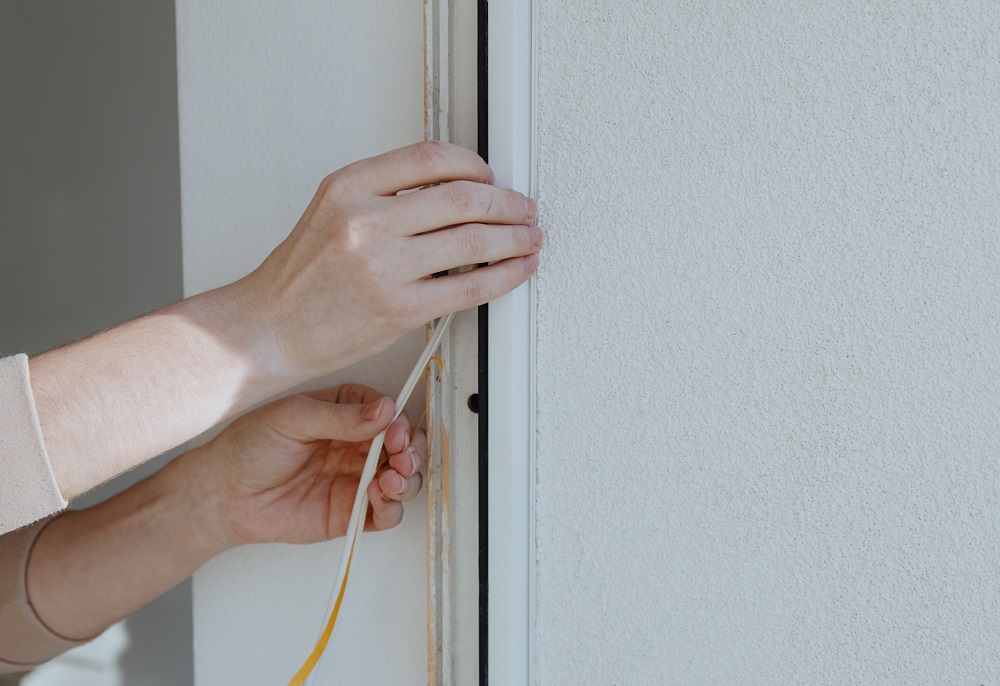
Weatherstripping along side jambs and the top of the door frame completes the exterior seal. Compression-style rubber or vinyl weatherstripping holds up best on exterior doors exposed to direct sun and Gulf Coast humidity. Inspect existing weatherstripping annually for compression or cracking, since worn strips lose their contact seal and allow air infiltration even when the door appears fully closed.
Window locks pull both sashes together, closing air leak gaps at the meeting rail. For large double-hung windows, a second lock near each outside edge closes the gap across the full sash width rather than just the center. Adding weatherstripping along the bottom of the lower sash before locking creates a tighter exterior seal than the lock hardware alone provides.
Spray foam applied around utility penetrations, finished with an exterior caulk layer, creates a two-stage seal that holds up against humidity and temperature changes. This step addresses some of the most persistent drafts in older homes where original construction left penetrations open or sealed with materials that have since failed.
Our exterior renovation services include siding assessment and repair for homes where panels have cracked, buckled, or shifted away from the framing. Fixing those issues at the surface prevents deeper wall damage and keeps your building envelope airtight through Louisiana’s hot summers and storm seasons.
For homes with fiber cement, vinyl, or wood siding, matching replacement panels and re-caulking seams at regular intervals maintains a continuous thermal barrier.
When caulking and weatherstripping fail to stop drafts, the problem has moved beyond surface gaps. Professional exterior renovation is the right call when air leaks originate inside the wall assembly, along the foundation, or across multiple rooms simultaneously. Here are the clearest signs:
 Drafts return after caulking and weatherstripping. Leaks that come back after surface sealing are likely deeper inside the wall assembly or along the foundation, where DIY products cannot reach.
Sealing drafty rooms from the outside stops air leaks at their source, reduces energy bills, and protects your home’s structure from the moisture damage that follows when unconditioned air infiltrates your walls. Done correctly, exterior air sealing is one of the highest-return home improvements a New Orleans homeowner can make.
Big Easy Renovations is your trusted New Orleans renovation contractor for exterior projects of all sizes, from targeted siding repair to full building envelope overhauls.
Call us at 504-470-0455 to schedule your consultation today.
Drafty rooms are caused by air leaks in the building envelope. Gaps at the rim joist, foundation, siding seams, and around window and door frames allow cold air in while conditioned air escapes. In older New Orleans homes, decades of settling and storm exposure widen those pathways over time.
Yes. The U.S. EPA estimates homeowners save an average of 15 percent on heating and cooling costs by air sealing their homes and adding insulation in attics, floors over crawl spaces, and basements. Air leaks account for 25 to 40 percent of a typical home’s heating and cooling energy use, according to ENERGY STAR.
Caulk seals stationary gaps around fixed components like window frames, door frames, and wall penetrations. Weatherstripping seals moving parts, such as door edges and operable windows, creating a flexible contact seal when the door or window closes.
A visual inspection on a windy day reveals obvious gaps in caulk, cracked siding, and open penetrations. For a thorough air leak assessment, a professional performs a blower door test that depressurizes the home and makes leak locations detectable with an infrared thermometer or smoke stick.
Yes. Cracked, buckled, or missing siding panels allow outside air to bypass the wall assembly and reach interior spaces. They also allow moisture into the wall cavity, which degrades insulation effectiveness and can damage framing over time.
Not necessarily. Most drafts originate at the building envelope around frames, through siding, and along penetrations, not through the glass itself. Exterior caulking, weatherstripping, and siding repair are typically more cost-effective first steps than full window replacement.
Silicone caulk on exterior surfaces lasts 5 to 20 years under normal conditions. In the Gulf Coast climate, heat, UV exposure, and storm moisture shorten that lifespan. Inspecting and re-applying exterior caulk every 5 to 7 years is a practical maintenance schedule for New Orleans-area homes.

 By Admin
 Choosing between hardwood floors and vinyl floors is determined by your needs and lifestyle. Viny...
Read More 
Table of Contents Key Takeaways The Decisive Comparison a. Space b. Access c. ...
Read More 
Table of Contents 1. Key Takeaways 2. Fence Designs That Combine Aesthetics and Functionality...
Read More 
Remodeling a house can be an exciting and rewarding experience, but it can also be overwhelming. ...
Read More 
Start with a solid plan to upgrade your old bathroom. Focus on layout, design, and budgeting. Dec...
Read More 
Table of Contents Key Takeaways Understanding Home Flow a. Traffic Patterns b. Na...
Read More